Claude Code

Claude Code in VS Code: the extension or the terminal, and how to set up both
Two ways to run Claude Code in VS Code that share one engine: the extension's chat panel with inline diffs and plan review, or the full CLI in the integrated terminal connected with /ide. How to set up each, and switch between them.

Claude Code CLI: the commands, flags and shortcuts you'll use every day
The handful of Claude Code CLI commands, prefixes, shortcuts, slash commands and flags that cover a working day: start, resume and script a session, mention files, run shell commands, switch modes and models, and rewind.

Claude Code vs Cursor: how they differ when you work in them
Claude Code is a terminal-first agent that runs on Claude; Cursor is an AI editor with its own agent, Tab autocomplete and models from several labs. Where you work, which models you get, how each reads project rules, how you undo, and how each runs unattended.

Claude Code thinking: turn it on, off, and see what it reasoned
Thinking in Claude Code is the reasoning Claude emits before it responds, and on the newest models it's always on. Which models let you turn it off, the toggle, /config and MAX_THINKING_TOKENS, how to read the reasoning, and what it costs.

Claude Code session limits: what resets, and how to plan around them
A Claude Code session limit is a usage window on your subscription, and it resets on its own. Which limit you hit, session, weekly, model or spend, decides what to do: wait and let Claude Code continue, use usage credits, or switch models. How each works, and how to make the window last.

Claude Code token usage: read /usage and /context before it costs you
Claude Code token usage scales with context, because every request carries the whole conversation. How to check usage with /usage, /context and the status line, why a long session costs more, and the habits that reduce token usage.

/compact in Claude Code: when to compact, and what auto-compact keeps
/compact replaces the conversation with a summary so a Claude Code session keeps going. When to run it with a focus, when to /clear instead, what survives compaction, and how to set when auto-compact fires.

Claude Code effort levels: which one for which task
Claude Code has five effort levels, from low to max, and the newest models start at medium. What each level is for, the default on each model, which setting wins when several apply, and how ultrathink raises a single turn.

Claude Code on GitLab: pipelines, merge requests and @claude
Claude Code runs on GitLab as a CI/CD job you add yourself: one job, one masked API key, and Claude opens merge requests from your runners. How to set it up, wire @claude mentions, run it on Bedrock or Google Cloud, and cap what each run can touch and spend.

Claude Code GitHub Actions: set it up, and decide what it can touch
Claude Code GitHub Actions runs Claude Code in your repository's workflows, on an @claude mention or a prompt on any GitHub event. How to install it, how it signs in, and the four layers that decide what a run can touch and spend.

Claude Code SDK or claude -p: which one to script against
The Claude Code SDK is now the Claude Agent SDK, and it runs the same agent as claude -p. When a script should call claude -p, when your code needs the SDK, what each loads by default, and how each signs in.

Claude Code PR review: four ways to review every pull request, and which to pick
Managed Code Review, Claude in your own CI, /code-review in your session, or ultrareview: what starts each Claude Code PR review, where it runs, what it costs, and which to pick for your plan and code host.

Claude Code headless mode: run claude -p from scripts, with output you can parse and a cap on spend
Claude Code headless mode runs one prompt with claude -p and exits. How to make runs repeatable with bare mode, approve tools without a prompt, read JSON output, and cap turns and spend.

Claude Code /loop: run a prompt on a schedule, and know how it stops
Claude Code /loop reruns a prompt on a schedule while your session stays open. How to pick a fixed or Claude-chosen interval, when runs actually start, how to stop each kind of loop, loop.md, and the 7-day expiry.
Claude Code /goal: how to set a goal it can actually finish
Claude Code /goal keeps working until a separate small model agrees your condition holds. How to write a condition the evaluator can prove, run it unattended in auto mode, script it, and what stops a goal early.

Claude Code automation: five ways to run it unattended, and what to check first
Claude Code runs without you from a claude -p script, with /goal or /loop in a session, as a cloud or desktop scheduled task, or in GitHub Actions. How to pick by what starts each run, and Anthropic's five checks before you walk away.

Claude Code MCP servers on a team: add, share and control them
Claude Code MCP servers are added at one of three scopes, shared through a committed .mcp.json, and controlled for a team with managed settings. How each step works, which control pattern fits, and the details that decide whether an allowlist holds.

Claude Code on Amazon Bedrock: when a team should route through AWS
Route Claude Code through Amazon Bedrock when AWS has to process your prompts and code, or your compliance program needs it. What a team gives up on Bedrock, what it gains, and the AWS-billed middle option, Claude Platform on AWS.

Claude Code permissions: allow, ask and deny rules that hold
Claude Code permission rules run in a fixed order, deny, then ask, then allow, and the first match decides. How to write Bash, file and MCP rules that match what you meant, where a path anchors, and where a rule stops protecting you.

Claude Code settings.json: every scope, and which file wins
Claude Code reads settings from four JSON files plus managed settings, and the highest level that sets a key wins. Where each file lives, who it reaches, how lists merge, and why a key you commit can still miss a teammate.

Claude Code monitoring for a team: which tool answers which question
Claude Code monitoring for a team takes three tools: the analytics dashboard for who uses it and what it ships, the spend report or Console for cost, and OpenTelemetry for live per-person tokens and cost. What each shows, who can open it, and the limits to know.

Claude Code sandbox: what it stops, what it doesn't, and when to use a container
How to set up the Claude Code sandbox: turn it on with /sandbox, prove it works, allow only the hosts and paths a build needs, block credential reads, close the unsandboxed retry, and know when a container is the better boundary.

Is Claude Code safe for a business? What it can reach and what you control
Claude Code is safe enough for business use when three things are set on purpose: the plan developers sign in with, the permission mode sessions start in, and the limits locked in managed settings. What it can reach, where your code goes, who approves each action, and the version a team should run.

Claude Code best practices for a team: what to write down and what to enforce
Claude Code best practices for a team: what belongs in CLAUDE.md, which rules to enforce with hooks, deny rules and managed settings, how to scope them, and how to measure a pilot.

Claude Code hooks: how to set up guardrails that actually block
How to set up Claude Code hooks: format every file on edit, block protected files with exit code 2, make a guardrail fail closed, and send Claude back when the tests fail.

Claude Fable 5.2 in Claude Code: what it costs and when to switch
Anthropic released Claude Fable 5.2 on November 9, 2026, and Claude Code needs 2.1.321 to run it. What it costs next to Opus 5.5 and Fable 5.1, what the update changes about /model fable and /model best, and why switching mid-session re-reads the whole conversation at full price.

Claude Code subagents: when to use them and how to set one up
When to use a Claude Code subagent, how to create one as a Markdown file, how to limit its tools, model and permissions, and what it costs against your usage limits.

Claude Code agent view: run and manage parallel sessions from one screen
How to use Claude Code agent view: open it with claude agents, dispatch one background session per task, read each row's state, peek and reply, attach for the full conversation, and clean up the worktrees afterward.

Claude Code /batch: split one large change across parallel agents
How Claude Code's /batch skill works and how to run it: prepare the repository, write the instruction, check the 5 to 30 unit plan, answer permission prompts, review one pull request per unit, and clean up the worktrees.

Best Claude connectors for small teams: what to turn on first (2026)
The Claude connectors a small team should turn on first, grouped by job: email, calendar and files, CRM, project management, design and development. What each can read and change, how to set every tool to Always allow, Needs approval or Blocked, and when to add custom connectors and desktop extensions.

Cursor worktrees vs Claude Code worktrees: four differences that matter
Cursor worktrees vs Claude Code worktrees: both give each agent its own git checkout. How each starts one, sets up the checkout, brings changes back and cleans up old worktrees, the pattern each covers that the other doesn't, and which fits how you work.

Claude Code worktrees: run parallel sessions without collisions
How to use Claude Code worktrees: start a session in its own git worktree with claude -w, copy .env files in with .worktreeinclude, branch from your current work or a pull request, isolate subagents, clean up, and fix the errors worktrees print.

Claude Code put account emails in User-Agent headers: what to update and check
Claude Code sometimes put signed-in users' account email into the User-Agent header of requests it wrote. Version 2.1.317 adds a check that asks first, the stable channel was still on 2.1.311, and the next release removes the email from the model's context. What to update, and what the check misses.

Claude Code vs Codex pricing: what $20, $100 and $200 buy (2026)
Claude Code vs Codex pricing, plan by plan: what the $20 entry plans include, what Claude Max, Ultra and ChatGPT Pro add at $100 and $200, the API rates for each tool's default model, and how to pick a plan from your own usage.

Claude Code parallel agents: the 5 ways and which one to use
How to run Claude Code agents in parallel: when to use subagents, agent view, agent teams, dynamic workflows or projects, how to give every session its own git worktree, and what parallel agents do to your token use.

Claude Code remote control: drive a local session from your phone
How to use Claude Code remote control: start a session with claude remote-control or /rc, connect from your phone or browser, run several sessions from one server, keep them alive, turn it on for every session, and fix the errors it prints.

Claude data privacy on Team: training, retention and access (2026)
What Anthropic does with your business's data on Claude Team: training and the feedback exception, every published retention period, who in your company can see what, the certifications Anthropic lists, and what needs Enterprise or zero data retention.

Conductor joins Meta: what Claude Code users do before November 20
Conductor is joining Meta. Conductor Cloud goes read-only on November 13 and shuts down on November 20, while the local Mac app keeps working until early 2027. What to move, what keeps working, and what replaces it in Claude Code.

Claude Team vs Pro vs Max: which seat each person needs (2026)
Claude Team vs Pro vs Max, decided one person at a time: which seat a light chat user, a daily Cowork user and an all-day Claude Code user need, when usage credits beat a Premium seat, and what Max's and Team's API credits actually cover.

PHP2Shell and the AI exploit: what changed for anyone shipping code
AI helped turn PHP2Shell, a PHP bug class judged unexploitable in 2024, into working remote code execution, and attackers were probing within hours of the fix. What happened in October 2026, where AI showed up on both sides, and how a pipeline that agents run should patch now.

Best Claude plugins for teams: what to standardize on (2026)
The Claude plugins a team should standardize on in October 2026, grouped by job: knowledge work, sales and CRM, Claude Code, finance and legal. Each with its source and install count, plus how a Team owner rolls them out and vets community plugins.

Claude scheduled tasks: how to set one up for your team (2026)
How Claude scheduled tasks work in Cowork in October 2026: how to set one up, which plans include them, where they run on a Team plan, a read-only weekly digest to start with, and how approval modes interact with connectors set to Needs approval.
Claude Projects for teams: how to share and set them up (2026)
How to use Claude Projects as a shared knowledge base on a Team plan: what a Project holds, Projects vs chats, public vs private sharing, Can view vs Can edit, the Data and privacy settings, and the limits to plan around.

Claude Cowork vs Claude Code vs chat: which to use for each job
Which Claude surface each teammate should use on a Team plan: chat for thinking, Cowork for finished files and tasks, Claude Code for software. How Cowork runs after the September and October 2026 changes, and what one seat shares across all three.

Claude plugins vs skills vs connectors vs Projects: which to use (2026)
Skills, plugins, connectors and Projects compared in one table: what each is, what it contains, where it runs in chat, Cowork and Claude Code, when to use which, and how a Claude Team owner provisions each one org-wide.

Claude SSO and admin settings: how to set up a Claude Team org (2026)
How to set up Claude SSO on a Team plan: domain verification, Require SSO and the lockout traps, roles and JIT provisioning, every organization settings page and its Team default, and what needs Enterprise (SCIM, audit logs).

Claude Team vs Enterprise: who actually needs Enterprise (2026)
Claude Team vs Enterprise for a 2 to 150 person business: what the 20-seat minimum and usage billing cost, the compliance and identity features only Enterprise has, and a decision table for who actually needs it.

Claude Team plan: pricing, seats and how to set it up (2026)
What the Claude Team plan costs in October 2026, when to buy Standard vs Premium seats, how it compares to Pro, Max and Enterprise, how to control connectors and plugins, and a 10-step setup for your first week.
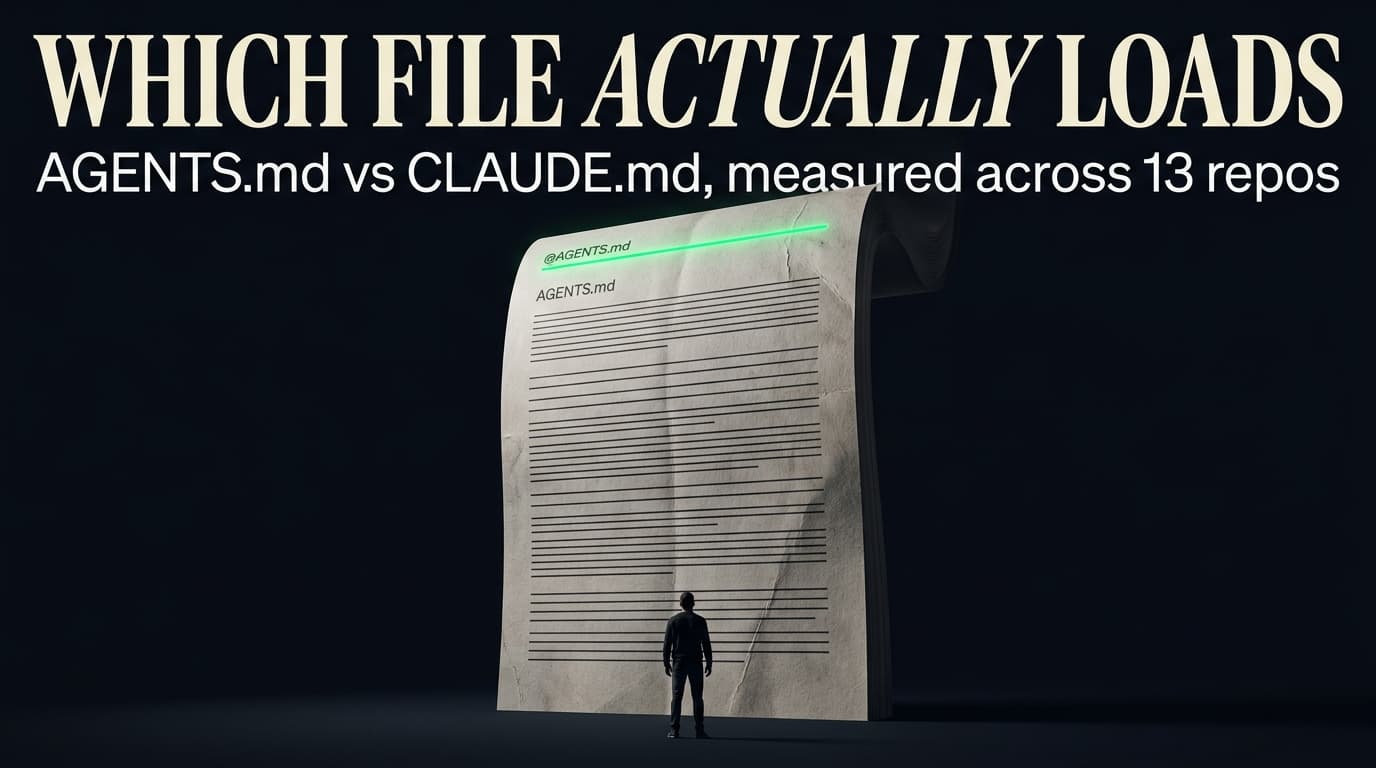
AGENTS.md vs CLAUDE.md: which file your agent actually reads
Both files in one repo, measured: load order, token cost, and which one wins when they disagree. Every guide explains the difference; this one runs the test.

Claude Code Video Editing: How I Stopped Touching the Timeline
Claude Code can drive a real video timeline over MCP – reading project state, placing clips, styling captions – on a project file you can open and inspect. Here's the setup that turns an agent into an editing team, the four-layer specification that makes it work, and the decisions that stay human.

Your CLAUDE.md File Is Too Long: The Context Diet That Cut Mine 87%
Anthropic removed ~80% of Claude Code's system prompt for Claude 5, and the internet decided that means delete your CLAUDE.md. Don't. Here's the four-bucket diet that took mine from 1,204 lines to 151 without losing a single incident-earned warning.
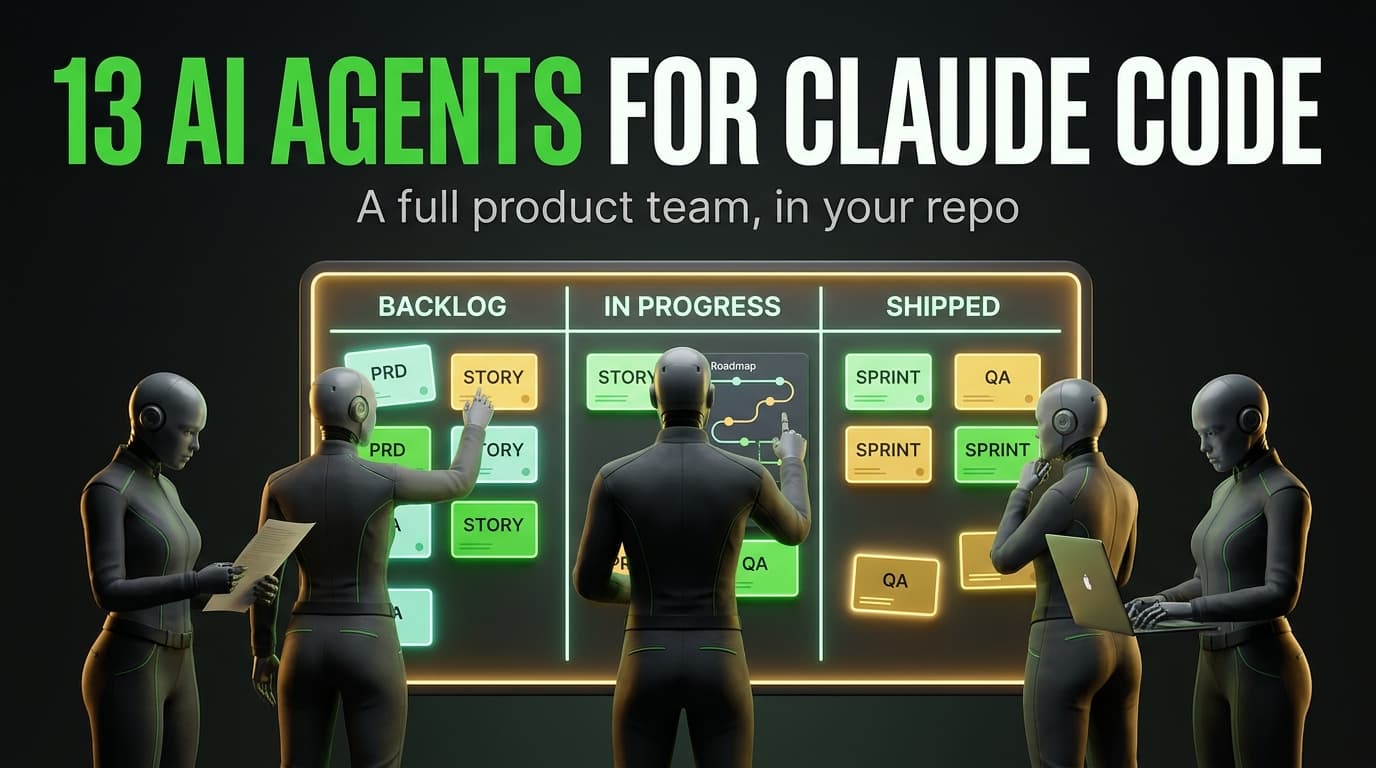
Give Claude Code a full product team with WoterClip
WoterClip routes your GitHub issues to AI persona agents. Here's how to import a full 13-role product team into Claude Code in about five minutes.
Ready to put AI to work?
Book a free discovery call and we'll tell you what we'd automate first – and what we wouldn't touch yet.
30 minutes. No pitch. You keep the plan.
Prefer to build it yourself? Try Flow free