Last updated: July 15, 2026
TL;DR
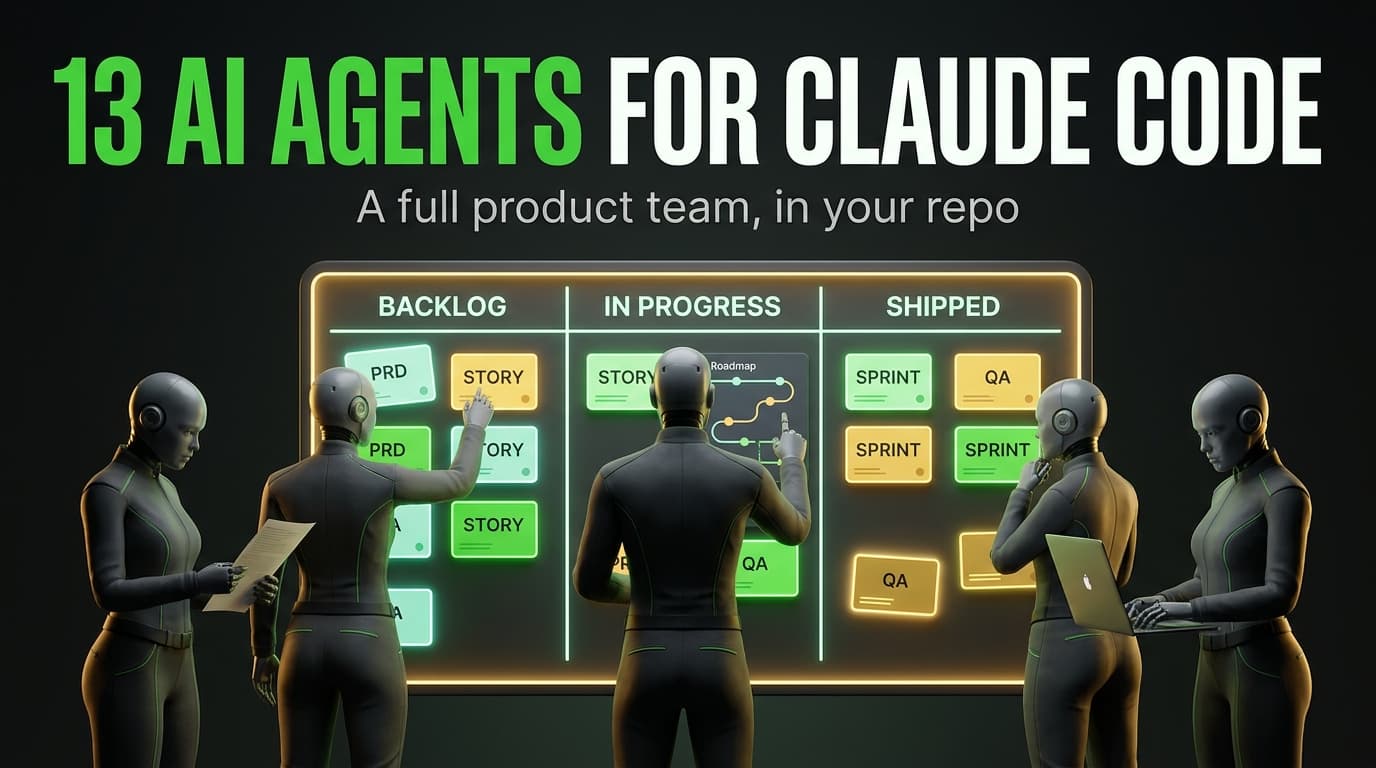
WoterClip is a free Claude Code plugin that hands each of your GitHub issues to an AI persona, matched by the issue's label. It ships with four roles. The Product Execution pack adds 13 more – PRD writer, story writer, sprint manager, QA, and the rest of a real product team – so you can import the whole crew in about five minutes.
What WoterClip actually does
The idea behind WoterClip is small enough to hold in your head. Your GitHub issues become the queue. You label one prd or qa or sprint, run /heartbeat, and the plugin grabs the top issue, figures out which persona owns that label, works the issue as that persona, and comments back with what it did and what is next.
No server. No database. Nothing running in the background. Every GitHub call goes through the gh CLI, which is why a scheduled heartbeat can run with nobody watching. And you never lose the wheel – WoterClip calls you the Board, the one it escalates to when an agent gets stuck.
A persona is just three files: a SOUL.md for who it is, a TOOLS.md for what it can touch, and a config.yaml for the model and turn limits. That is the entire contract. The plugin is free and MIT on GitHub.
Four personas isn't a team
A clean install gives you four: an orchestrator, a CEO, a backend worker, a frontend worker. Fine for routing. Not a product team.
Say you want a persona that writes a real PRD, breaks it into stories, ranks the backlog, plans the sprint, and writes the test cases. You write each one yourself – identity, tools, config, three files a role. Thirteen roles is a stack of blank pages before a single heartbeat runs.
That gap is the reason a persona pack exists at all. The engine is free. The crew is what makes it useful the day you install it.
What's in the Product Execution pack
It is one team, not a grab bag – 13 authored personas that take a GitHub issue and turn it into shipped-product work. Each one answers to a label, so WoterClip always knows who to hand an issue to.
| Persona | Handles | Label |
|---|---|---|
| VP of Product Execution | Coordinates the team, routes work | (manager) |
| PRD Writer | 8-section product requirements docs | prd |
| Story Writer | User stories, job stories, WWAs | story |
| Prioritization Specialist | RICE, ICE, Kano, MoSCoW scoring | prioritization |
| Sprint Manager | Sprint plans and retros | sprint |
| QA Specialist | Test scenarios | qa |
| Risk Analyst | Pre-mortem risk analysis | risk |
| Roadmap Specialist | Outcome-focused roadmaps | roadmap |
| OKR Specialist | Quarterly OKRs | okr |
| Release Manager | Release notes | release |
| Stakeholder Analyst | Stakeholder maps and comms plans | stakeholder |
| Meeting Analyst | Meeting notes and action items | meeting |
| Data Generator | Realistic test datasets | data |
Read it top to bottom and it moves like a real team. A PRD becomes stories, the stories get ranked, the ranking becomes a sprint, the sprint gets QA'd, the ship gets release notes. The Risk Analyst runs a pre-mortem on the plan; the Stakeholder Analyst lines people up before launch. You just label the issue for wherever it is in that arc.
Set it up in about five minutes
- Install WoterClip free from the Claude Code plugin marketplace:
/plugin, addwotai-dev/woterclip, install. You will also want Claude Code and aghCLI you have already logged into. - Run
/woterclip-initin your repo. That drops in the config, the persona folder, and the GitHub labels. - Run
/persona-importand point it at the pack'spersonas/folder. WoterClip converts each file into a persona. - Label an issue for the job –
prd,story,qa. The map in the pack tells you which label goes to which role. - Run
/heartbeat. First time, try/heartbeat --dry-runso you can see what it would pick before it touches anything. - If you like it,
/schedule 1h /heartbeatand let the crew chew through the backlog on its own.
The pack ships that "which persona when" map and a quickstart, so you are not staring at 13 labels wondering which one you meant.
Why a curated pack beats rolling your own
The time part is obvious: 13 written roles instead of 13 empty files. The coherence part is the one people miss.
These personas know about each other. The PRD Writer hands off to the Risk Analyst and the Story Writer. The Story Writer hands off to QA. That handoff graph is the difference between a team and 13 bots that happen to share a repo. And the map earns its keep at 9pm on a Tuesday, when knowing you could import 13 roles is a lot less useful than knowing which label to slap on the issue in front of you.
Open source, and credited
The 13 personas are not mine, and the listing says so up front. They are the Product Execution team from Pawel Huryn's open-source, MIT-licensed Product Compass package, curated, mapped, and packaged for WoterClip, with full attribution in the download's NOTICE file.
MIT is what makes that clean: you can redistribute as long as the original copyright and credit ride along, so the attribution is the license doing its job, not a nicety. What the pack is actually worth is the curation, the map, and the import-ready format – WoterClip itself stays free and MIT either way.
It is pay-what-you-want on Gumroad, down to $0. If it saves you an afternoon of writing agent roles, pay what that afternoon was worth.
Frequently asked questions
What is WoterClip?
WoterClip is a free, MIT-licensed Claude Code plugin. It routes GitHub issues to AI persona agents by issue label, runs them through a /heartbeat loop, and posts structured results back on each issue. No server or database required.
Do I need the persona pack to use WoterClip?
No. WoterClip is free and ships four default personas. The pack adds a full 13-role product team so you do not have to author each persona by hand. The plugin works with or without it.
How do the personas route to issues?
Each persona maps to a GitHub issue label. Label an issue prd and the PRD Writer picks it up; label it qa and the QA Specialist does. Unlabeled issues fall to the manager persona, which triages and routes them.
What does the Product Execution pack include?
Thirteen authored personas (PRD, stories, prioritization, sprint, QA, risk, roadmap, OKR, release, stakeholder, meeting, data, plus the VP), a "which persona when" map, and a quickstart. All import-ready via /persona-import.
Is it really free?
The WoterClip plugin is free and MIT-licensed. The persona pack is pay-what-you-want on Gumroad with a $0 floor, so you can download it for nothing or pay what it is worth to you.
What do I need installed?
Claude Code, an authenticated gh CLI, and a GitHub repository with Issues enabled. WoterClip drives every GitHub action through gh, so there is nothing else to run.
Where do the personas come from?
They are the Product Execution team from Pawel Huryn's open-source Product Compass package, MIT-licensed. The pack curates and maps them for WoterClip and preserves the original attribution in the download.
Can I run the team on a schedule?
Yes. /schedule 1h /heartbeat runs a heartbeat every hour. Because WoterClip works headlessly through the gh CLI, scheduled runs pick up new issues, do the work, and report back without you in the loop.
Get the pack
WoterClip gives Claude Code a way to work your GitHub backlog. The Product Execution pack gives it a team to do it with.
- Get WoterClip free: https://wotai.co/products/woterclip
- Get the Product Execution persona pack (pay-what-you-want): https://alexk1919.gumroad.com/l/woterclip-persona-pack
If this is your kind of thing, Flow is where WotAI ships agentic Claude Code workflows for solo operators, and 760+ builders trade what is working in the Skool community. More posts on the WotAI blog.
Stop guessing. Score your first workflow.
Score one workflow in about five minutes. Nine questions, a grade, and the specific gap holding it back - no call required.
Related Posts
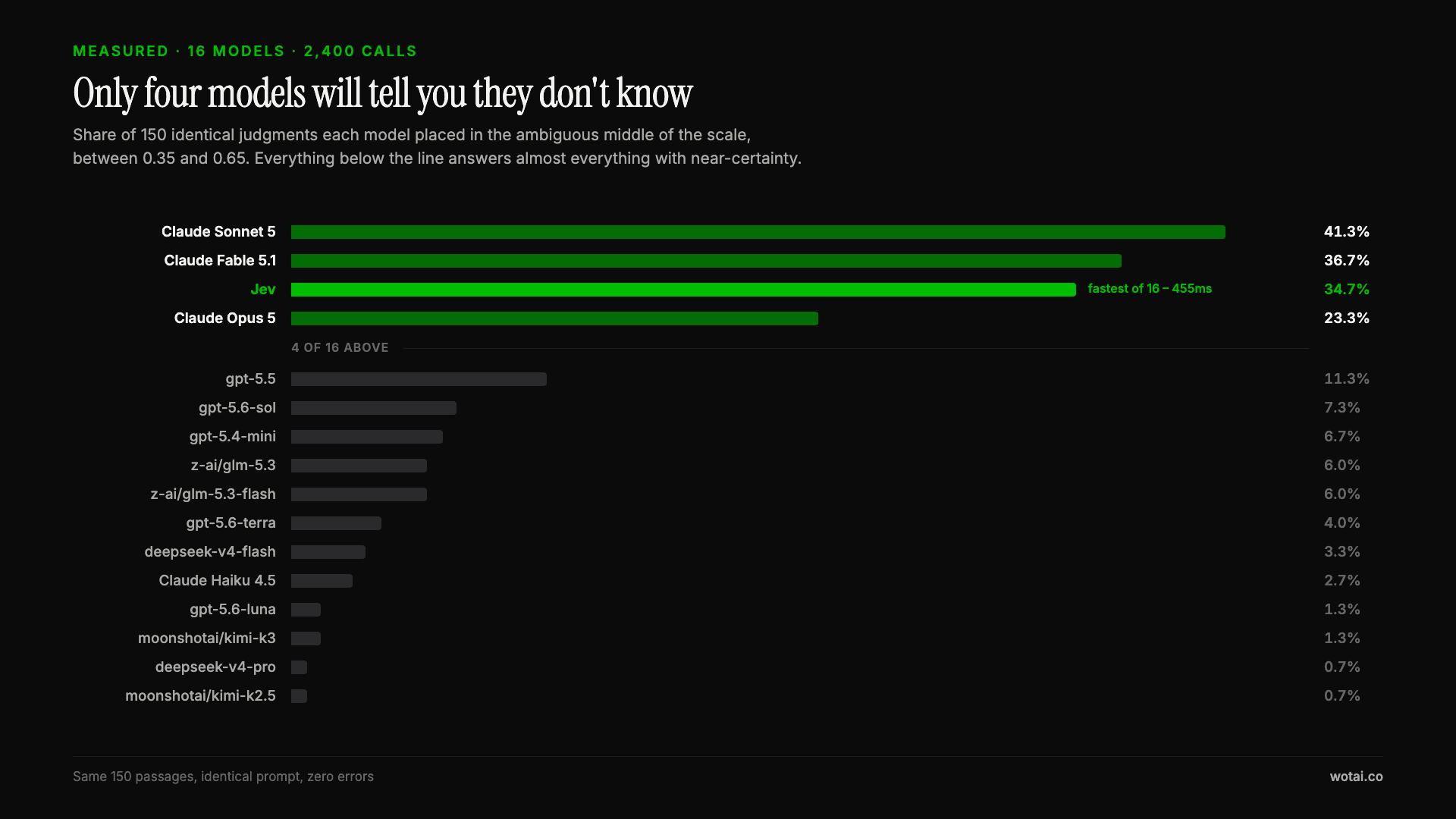
Jev is the only sub-second model that will tell you it doesn't know
Sixteen models on the same 150 passages, plus two more tasks. Only four of the sixteen will say they are unsure, and Jev is the only one of those four that answers in under a second.
AGENTS.md vs CLAUDE.md: which file your agent actually reads
Both files in one repo, measured: load order, token cost, and which one wins when they disagree. Every guide explains the difference; this one runs the test.
Compound engineering vs Superpowers: what each one installs
Both Claude Code plugins installed and measured: 14 skills against 33, one SessionStart hook against none, and the six skills that collide when you run both.