Anthropic just doubled Claude Code's rate limits – and signed for every GPU in SpaceX's Colossus 1 data center to back it up

If you use Claude Code on a Pro, Max, Team, or seat-based Enterprise plan, your 5-hour rate limits just doubled. If you've ever bounced off the peak-hours throttle on Pro or Max, that throttle is gone. Both effective today.
The reason both happened on the same day: Anthropic just signed an agreement with SpaceX to use the entire compute capacity of SpaceX's Colossus 1 data center. Over 300 megawatts. More than 220,000 NVIDIA GPUs. Online inside one month. SpaceX continues to own and operate the facility; Anthropic gets exclusive access to the compute output.
This is the most consequential infrastructure announcement Anthropic has made in 2026, and it's the kind of news that tells you exactly what the next 12 months of Claude Code will look like.
What changed for users today
From the official announcement, three things shifted at the same instant:
Claude Code 5-hour rate limits doubled. Pro, Max, Team, and seat-based Enterprise plans all get 2× the previous ceiling on the rolling 5-hour window. If you've been pacing your sessions to avoid hitting the cap, you have twice the headroom now without changing your subscription.
Peak-hours throttling removed for Pro and Max. The peak-hours limit reduction (which kicked in during US workday hours and effectively halved your usable window for stretches of the day) is eliminated. Pro and Max accounts now run at the full 5-hour ceiling regardless of when you're working.
Claude Opus API rate limits substantially increased. The announcement names "Claude Opus model API rate limits" specifically – the API tier for direct Opus access scales up. Anthropic didn't publish the new specific numbers in the announcement text, so the exact ceiling depends on what your tier shows in the Anthropic Console.
Three changes, all server-side, all live today. Nothing for you to update or configure.
The deal that paid for it
Anthropic and SpaceX agreed that Anthropic gets all of the compute at the Colossus 1 data center. Specifics from the announcement:
- 300+ megawatts of new capacity coming online for Anthropic
- 220,000+ NVIDIA GPUs in that capacity envelope
- Available within one month of the announcement (early-to-mid June 2026)
- Capacity will "directly improve capacity for Claude Pro and Claude Max subscribers"
Colossus 1 is the data center xAI originally built in Memphis – the one that took the AI industry roughly six months to stand up at the scale that historically took two-plus years. SpaceX's involvement here is on the energy and infrastructure side rather than purely as the rocket company. The relationship signals deep coupling between SpaceX's energy and infrastructure operations and Anthropic's compute strategy.
For Claude Code users specifically, "more capacity for Pro and Max" is the load-bearing line. The doubled rate limits aren't a marketing promotion – they're the rationing math falling out of the new compute coming online.
Where this fits in Anthropic's larger compute push
Today's SpaceX deal lands inside a broader compute-acquisition story Anthropic has been building all year:
| Partner | Scale | Status |
|---|---|---|
| AWS | Up to 5 GW | Multi-year |
| Google Cloud | 5 GW | Multi-year |
| Microsoft + NVIDIA (Azure) | $30 billion capacity commitment | Active |
| Fluidstack | $50 billion infrastructure investment | Active |
| SpaceX (Colossus 1) | 300+ MW / 220,000+ GPUs | Effective today; capacity online within one month |
| SpaceX (orbital compute) | "Multiple gigawatts" – exploratory | Future |
The pattern is simple: Anthropic is securing every gigawatt it can contract for, on every continent it can find them, from every infrastructure partner willing to deal. Today's Pro/Max rate-limit doubling is the first of many of these compute deliveries showing up at the user-facing layer.
That last row matters separately. Anthropic explicitly named "multiple gigawatts of orbital AI compute capacity with SpaceX" as part of the future trajectory. Orbital data centers have been talked about as a science-fiction concept for years. Anthropic naming it as part of a real partnership – with the rocket company that has the launch cadence and reusable second stages to actually attempt it – moves the conversation a step closer to "when" from "if."
What this means for builders
Three concrete shifts depending on what you ship:
If you build with Claude Code daily, you get an immediate quality-of-life improvement with no action required. The doubled 5-hour window covers more agent loops per session. Long extended-thinking runs on Opus 4.7 don't burn through the budget the way they did. You can finally leave a complex agent task running without doing the rate-limit math.
If you've been paying Pro to avoid Max because of the rate ceilings, the math changes today. Pro now gets 2× the prior ceiling, which probably moves the Pro tier from "constrained" to "comfortable" for a meaningful cohort of solo builders. If you upgraded to Max purely for the rate ceiling and not for the model access, it's worth rerunning the math.
If you build on the Anthropic API directly, the Opus rate limit increase changes the cost-versus-throughput calculus for production workloads. Apps that were tier-limited on Opus throughput can scale further on the same tier without renegotiating.
For WotAI Flow users specifically, the practical effect: agent-driven n8n workflow generation runs hit fewer rate-limit boundaries during heavy build sessions. The headroom shows up in the loops that matter most.
What's NOT in the announcement
A few honest unknowns worth flagging, because the announcement is unusually specific about some things and silent about others:
- Web Claude (claude.ai) rate limits. The announcement names Claude Code rate limits explicitly. It doesn't say whether the web Claude interface gets the same doubling. Worth testing your own usage rather than assuming.
- Specific Opus API numbers. "Substantially increased" without exact figures. The Anthropic Console is the authoritative source for your tier's actual new ceiling.
- Pricing changes. None announced. Pro stays at its current price, Max stays at its current price. The capacity got bigger; the price didn't.
- Whether your existing 5-hour window resets. If you were mid-window when the change landed, it's not clear whether your existing window kept its old ceiling or got bumped retroactively. New windows starting after the change definitely get the new ceiling.
- Orbital compute timeline. Multiple gigawatts of orbital compute is the headline; the specifics on when, where, and at what cadence are not in this announcement.
These aren't reasons to discount the news. They're the questions a careful reader will have, and the answers that aren't yet public.
What to do today
For most users: nothing. The change is server-side. Run claude --version to confirm you're on a current build, and your next 5-hour window will use the new ceiling automatically.
For teams running Claude Code at scale (agencies, internal platform teams, anyone managing seat-based Enterprise): worth re-running your per-seat usage math. The doubled ceiling probably means you can either consolidate seats or run more parallel agent workloads on the same seat count.
For people who upgraded to Max specifically for the rate ceiling: re-evaluate. If model access (Opus availability, longer context windows) is what you're paying for, Max still wins. If it was purely the ceiling, Pro just got a lot closer.
Why this is bigger than the headline
The headline-grabber is the SpaceX angle and the orbital compute mention. The real story is that Anthropic is treating compute capacity as the binding constraint on how good Claude can get for users, and they're solving for it at every available scale at once.
The 11 days between Opus 4.7 shipping (April 17) and the aggressive runtime hardening of Claude Code 2.1.126 was the software side of the same equation. The 64 changes since 2.1.126 in Claude Code 2.1.131 was more of the same: making the runtime hold up under heavier loads.
Today's announcement is the hardware side. More compute, fewer ceilings, broader access. The Anthropic strategy in 2026 is consistent enough now that you can predict the next move: every announcement bends in the direction of more capacity at the user-facing layer.
For builders, this is the right kind of news to get from your model provider. The next time you hit a rate ceiling in Claude Code, the answer is "we secured more compute" – not "use it less."
What's next
If you're building production-grade automations on Claude Code or shipping agent-driven workflows, the Production Claude Code series covers the cost, caching, and architecture decisions that compound on top of the larger windows. Episode 1 was the 1M context window. The doubled rate limits land directly in episode 4 (capacity planning), which is up next.
Until then: confirm your tier, watch your next 5-hour window, and if you've been pacing yourself to avoid the ceiling, stop pacing.
Stop guessing. Score your first workflow.
Score one workflow in about five minutes. Nine questions, a grade, and the specific gap holding it back - no call required.
Related Posts
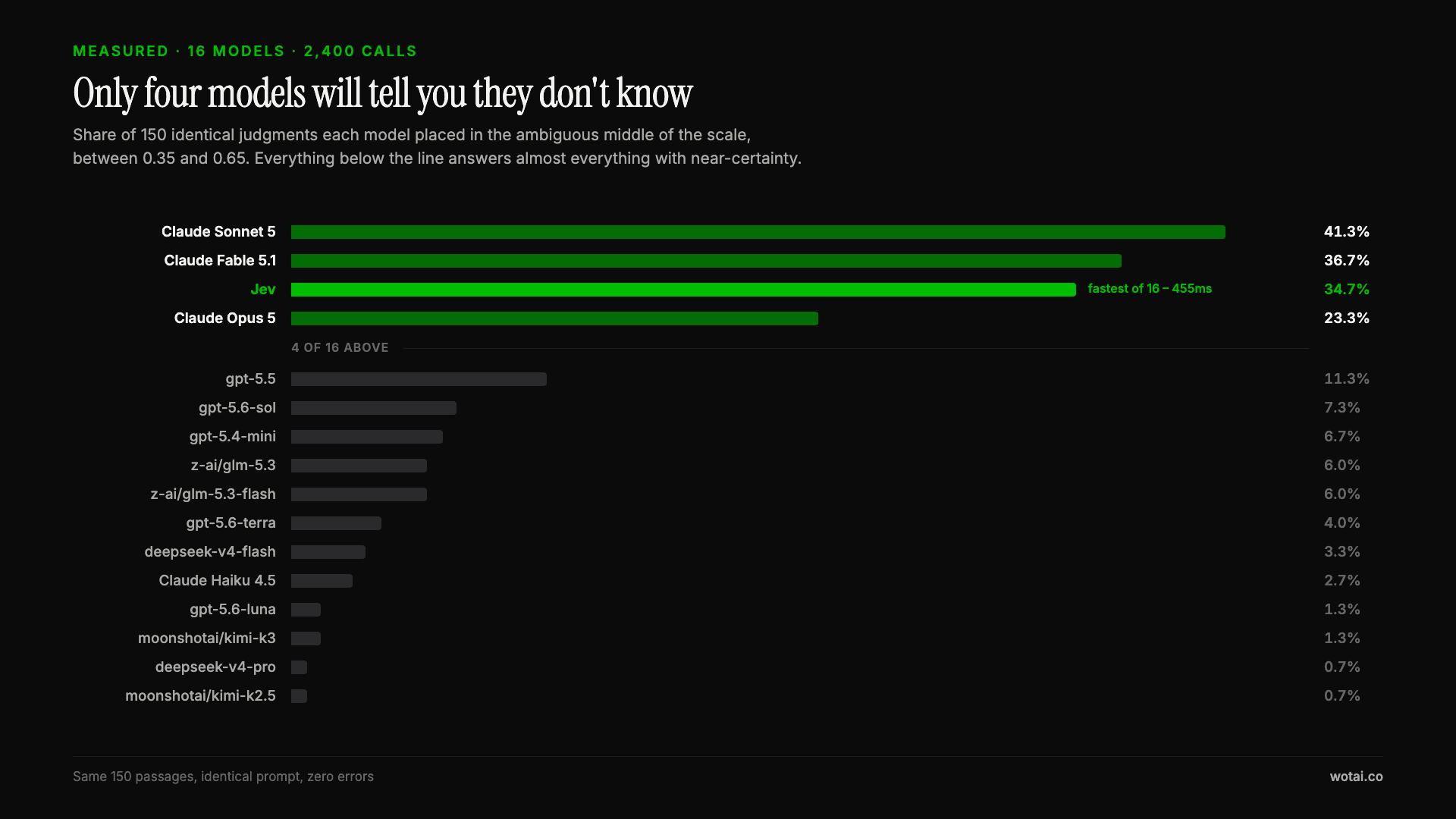
Jev is the only sub-second model that will tell you it doesn't know
Sixteen models on the same 150 passages, plus two more tasks. Only four of the sixteen will say they are unsure, and Jev is the only one of those four that answers in under a second.

AGENTS.md vs CLAUDE.md: which file your agent actually reads
Both files in one repo, measured: load order, token cost, and which one wins when they disagree. Every guide explains the difference; this one runs the test.

Compound engineering vs Superpowers: what each one installs
Both Claude Code plugins installed and measured: 14 skills against 33, one SessionStart hook against none, and the six skills that collide when you run both.