
Last updated: July 22, 2026
TL;DR
Brand DNA is the underlying identity pattern that makes your content recognizably yours – deeper than a logo, more specific than a tone-of-voice doc. It's the reason two writers at the same company can sound the same without coordinating. In 2026 it's also the thing that decides whether your AI content reads as you or as generic slop.
Here's what Brand DNA actually is, why traditional voice documents fail at scale, how to define yours – with or without an AI tool – and why Brand DNA is about to become something your software calls, not something your team reads.
Every brand has a voice. Most can't describe it.
Ask a founder what makes their brand different and you'll hear "we're authentic" or "we're customer-first." Ask their marketing team to write a LinkedIn post in that voice and you'll get five drafts that sound nothing alike.
That gap is the Brand DNA problem – and it's the reason most AI-generated content sounds generic, even when you feed it a style guide.
Brand DNA vs. brand identity vs. brand guidelines
These three terms get used interchangeably. They shouldn't be.
Brand identity is the full visual and verbal system: logo, colors, typography, messaging. It answers "what does this brand look like and say?"
Brand guidelines are the rulebook. They tell your team which hex codes to use, how to write headlines, and when to use the full company name vs. the short version.
Brand DNA is the underlying pattern that generates all of the above. It's not a document you hand someone – it's the reason two different writers at the same company can produce content that feels the same without coordinating.
Think of it this way: brand guidelines are the recipe. Brand DNA is the chef's palate.
A strong Brand DNA includes:
- Voice patterns – sentence length, vocabulary range, how you handle humor, whether you use contractions
- Value hierarchy – which benefits you lead with, what you never compromise on, where you're willing to be polarizing
- Audience model – who you're writing for, what they already know, what frustrates them, how they make decisions
- Competitive stance – how you position against alternatives, what you refuse to copy, where you intentionally diverge
Why traditional brand voice documents fail
Most brand voice documents describe a tone every competitor could claim. That's the core failure.
Open a typical one and you'll read something like:
Our voice is: Professional yet approachable. Confident but not arrogant. Clear and concise.
That describes every B2B SaaS company on the planet. It's not wrong – it's just not useful. There's nothing in those adjectives that helps a writer decide between "We built this for you" and "Built for teams who ship fast."
The problem gets worse at scale. When you have 10 people creating content across blog posts, social media, email sequences, and ad copy, vague guidelines produce vague consistency. Everyone interprets "professional yet approachable" differently.
And when you add AI to the mix, it gets worse still. Prompt an AI with "write in a professional yet approachable tone" and you'll get the same bland, hedge-everything, exclamation-point-happy output that every other company gets.
How AI content tools handle brand voice today
Most AI writing tools in 2026 approach brand voice one of three ways, and none of them capture Brand DNA.
Tone sliders. Pick from a dropdown: formal, casual, friendly, authoritative. These produce surface-level variation. The underlying content structure, argument style, and vocabulary range barely change.
Reference samples. Paste in 3–5 examples of your writing and the tool tries to mimic the style. This works better, but it's fragile – the tool latches onto superficial patterns (sentence length, specific phrases) rather than the deeper reasoning behind your voice.
Custom instructions. Write a system prompt describing your voice. Better than tone sliders, but you're still trying to compress years of brand evolution into a paragraph. And every person on your team writes that prompt differently.
These approaches capture symptoms of Brand DNA – specific words, sentence patterns, formatting preferences – without understanding why those choices exist.
What a Brand DNA approach looks like
A proper Brand DNA system reverse-engineers the patterns from your existing content instead of asking you to describe your voice.
This is the approach we built WotAI Echo around – what we call Brand DNA extraction. You feed it your best-performing content and it identifies the patterns that make your writing work:
- Which arguments you lead with and which you save for later
- How you handle objections (acknowledge and redirect vs. preemptively disarm)
- Your relationship with jargon (avoid it, redefine it, or lean into it)
- Sentence rhythm – short punchy opener, then longer explanation, then a one-line closer
- How you balance data with narrative
The result isn't a style guide. It's a model that can generate content in your voice because it understands the reasoning behind your choices.
The three layers of Brand DNA
Echo's framework breaks Brand DNA into three layers designed to work together.
Brand DNA
Your core identity patterns. The voice, values, and positioning that stay consistent whether you're writing a tweet or a whitepaper. This is the part most companies struggle to articulate – because it's implicit in your best writers' heads, not written down anywhere.
Audience DNA
Your audience's mental model. What they know, what confuses them, what motivates them, what they're skeptical about. Great brand voice isn't just about how you sound – it's about how you sound to them. A developer audience and a marketing audience need different brand positioning even if the underlying product is identical.
Competitor DNA
The landscape you're writing in. What your competitors say, how they say it, and – most importantly – what they leave unsaid. Brand differentiation isn't just about being different. It's about being different in ways your audience cares about.
When all three layers work together, the AI doesn't just match your tone. It makes the same strategic decisions your best writers would – leading with the right argument for the right audience while avoiding the same talking points your competitors use.
Brand DNA is becoming an API
Brand DNA is becoming infrastructure: a stored, callable asset your software can use, not a document your team reads once and forgets.
That's how WotAI Echo is built. Your Brand DNA, Audience DNA, and Competitor DNA live behind a single API surface built on MCP, the open protocol AI assistants use to connect to outside tools – alongside site audits, keyword research, and content generation (blog posts, pillar pages, content ideas, and social posts), 14 capabilities in total. Your content pipeline, an n8n workflow, or an AI agent can call the same engine, and every piece comes back generated against your three DNA layers.
Once brand voice works this way, consistency stops depending on people re-reading a style guide. The rules live in one place, and every tool that touches your content applies them. Ten writers interpreting "professional yet approachable" ten different ways was the old failure mode. One DNA, stored once, called by everything that writes for you – that's what replaces it.
Brand archetypes and where Brand DNA goes further
Brand archetypes give you a starting direction; Brand DNA gives you the specific coordinates.
If you've studied branding, you've probably encountered the 12 brand archetypes – Hero, Rebel, Sage, Creator, and so on. They're a useful starting framework for brand personality because they suggest certain vocabulary, narrative structures, and emotional registers. "We're a Sage brand" tells you something.
But archetypes are broad categories. Nike and Patagonia are both "Hero" brands. They sound nothing alike. The archetype tells you the general territory. Brand DNA maps the specific coordinates.
A Brand DNA system can take your archetype as an input – but it adds the granular details that make your Hero brand sound different from every other Hero brand in your category.
Practical steps to define your Brand DNA
You don't need an AI tool to start. Here's how to map your Brand DNA manually:
- Audit your best content. Pull your 10 highest-performing pieces across channels. Look for patterns – not what you said, but how you said it. Do you lead with problems or possibilities? Do you use "you" more than "we"? How long are your paragraphs?
- Interview your team. Ask three people to write the same announcement in "your brand voice." Compare the results. The parts they agree on are your core DNA. The parts they diverge on are your gaps.
- Study your competitors' patterns. Read 10 competitor blog posts. Note what feels generic across all of them. Your Brand DNA should deliberately break those patterns.
- Write your anti-voice. Describe what your brand would never say. "We'd never use buzzwords without defining them." "We'd never make a claim without data." Anti-voice constraints are often more useful than positive voice descriptions.
- Test with new writers. Hand your Brand DNA document to someone who's never written for you. Can they produce content that passes your "sounds like us" test? If not, the DNA isn't specific enough.
Why this matters now
Three forces are converging in 2026 that turn Brand DNA from a nice-to-have into infrastructure.
AI content volume is exploding. Companies that used to publish two blog posts a week now publish 10. Social teams post daily across five platforms. Every interaction – chatbot responses, email sequences, in-app copy – needs to sound on-brand.
Audiences detect generic AI content instantly. The "AI slop" backlash is real and measurable. A March 2026 Gartner survey found that 50% of consumers prefer brands that avoid using generative AI in consumer-facing content. Your content needs to sound human – specifically, it needs to sound like your humans.
Brand consistency drives revenue. Lucidpress's State of Brand Consistency report found that consistent brand presentation can increase revenue by up to 23%. When your content sounds different on every channel, you're leaving money on the table.
Brand DNA isn't a nice-to-have anymore. It's the infrastructure that makes AI content scale without losing what makes your brand yours.
Frequently asked questions
What is Brand DNA in marketing?
Brand DNA is the core identity pattern that makes a brand recognizably itself across all content and channels. It goes deeper than visual identity or tone-of-voice guidelines – it captures the underlying reasoning behind voice choices, argument structures, vocabulary patterns, and audience positioning.
How is Brand DNA different from a brand style guide?
A brand style guide tells you the rules (which colors to use, how to format headlines, approved terminology). Brand DNA captures the reasoning behind those rules – why your brand leads with data instead of emotion, why you use short sentences, why you address objections head-on rather than ignoring them.
Can AI learn a brand's voice?
Yes, but the approach matters. Simple tone sliders or brief prompts produce generic output. A Brand DNA approach – where AI analyzes patterns across your best content to understand your voice, audience, and competitive positioning – produces content that makes the same strategic decisions your best writers would.
What are the 12 brand archetypes?
The 12 brand archetypes, based on Carl Jung's psychological framework, are: Innocent, Sage, Explorer, Outlaw, Magician, Hero, Lover, Jester, Everyman, Caregiver, Creator, and Ruler. Each represents a set of values and personality traits. They're a useful starting point for brand personality, but Brand DNA adds the specific details that differentiate brands within the same archetype.
How do I define my Brand DNA without an AI tool?
Start by auditing your 10 best-performing content pieces for voice patterns. Interview your team to find where they agree and diverge on brand voice. Study competitor content to identify generic patterns you should break. Write an "anti-voice" document describing what your brand would never say. Test by giving your Brand DNA to a new writer and checking if they can produce on-brand content.
What is Audience DNA?
Audience DNA is a model of your audience's mental state – what they know, what confuses them, what motivates their decisions, and what they're skeptical about. Combined with Brand DNA, it ensures your content doesn't just sound like you – it resonates with the specific people you're trying to reach.
How does Brand DNA affect content at scale?
Without Brand DNA, scaling content production (whether with AI or a growing team) produces inconsistent results. Each writer or AI prompt interprets vague guidelines differently. Brand DNA provides the specific patterns and reasoning that keep content consistent across dozens of writers, channels, and formats.
What does brand voice as an API mean?
It means your brand identity – voice, audience, and competitive positioning – is stored as structured data that software can call. Instead of pasting a style guide into every prompt, your workflows and AI agents generate content against the stored Brand DNA, so consistency is enforced by the system rather than by each writer.
What tools help with Brand DNA in 2026?
WotAI Echo is built around a three-layer Brand DNA system – Brand DNA, Audience DNA, Competitor DNA – exposed through an API built on MCP, so your workflows and AI agents can generate on-brand content directly. Other tools like Jasper and Copy.ai offer brand voice features, but most rely on tone sliders or reference samples rather than full DNA extraction.
Tired of AI content that sounds like everyone else's? That's the exact problem WotAI Echo is built to solve – it extracts your Brand DNA from the content you've already written and makes it callable by every tool in your stack, and it's live now. Start the 14-day free trial, or join 760+ builders on Skool where we work through brand and content systems live.
Stop guessing. Score your first workflow.
Score one workflow in about five minutes. Nine questions, a grade, and the specific gap holding it back - no call required.
Related Posts
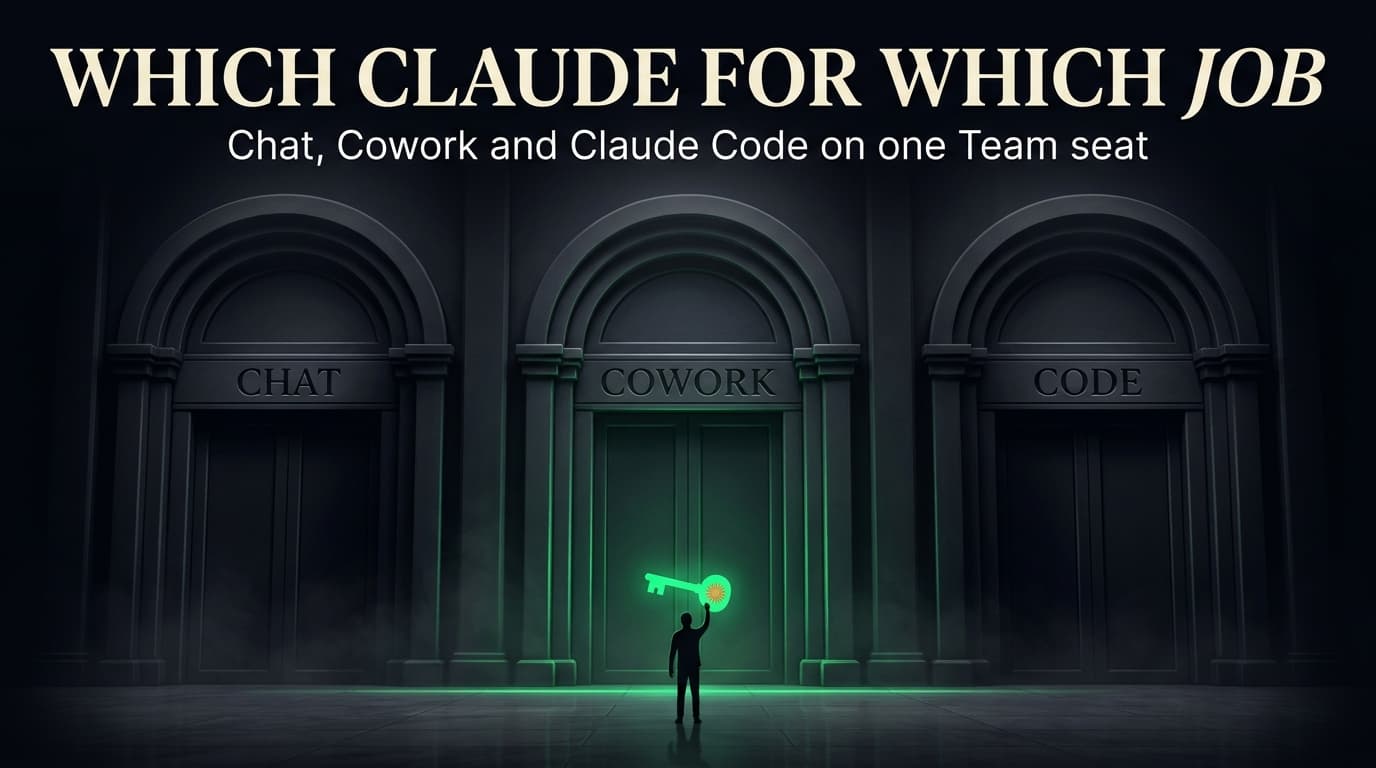
Claude Cowork vs Claude Code vs chat: which to use for each job
Which Claude surface each teammate should use on a Team plan: chat for thinking, Cowork for finished files and tasks, Claude Code for software. How Cowork runs after the September and October 2026 changes, and what one seat shares across all three.
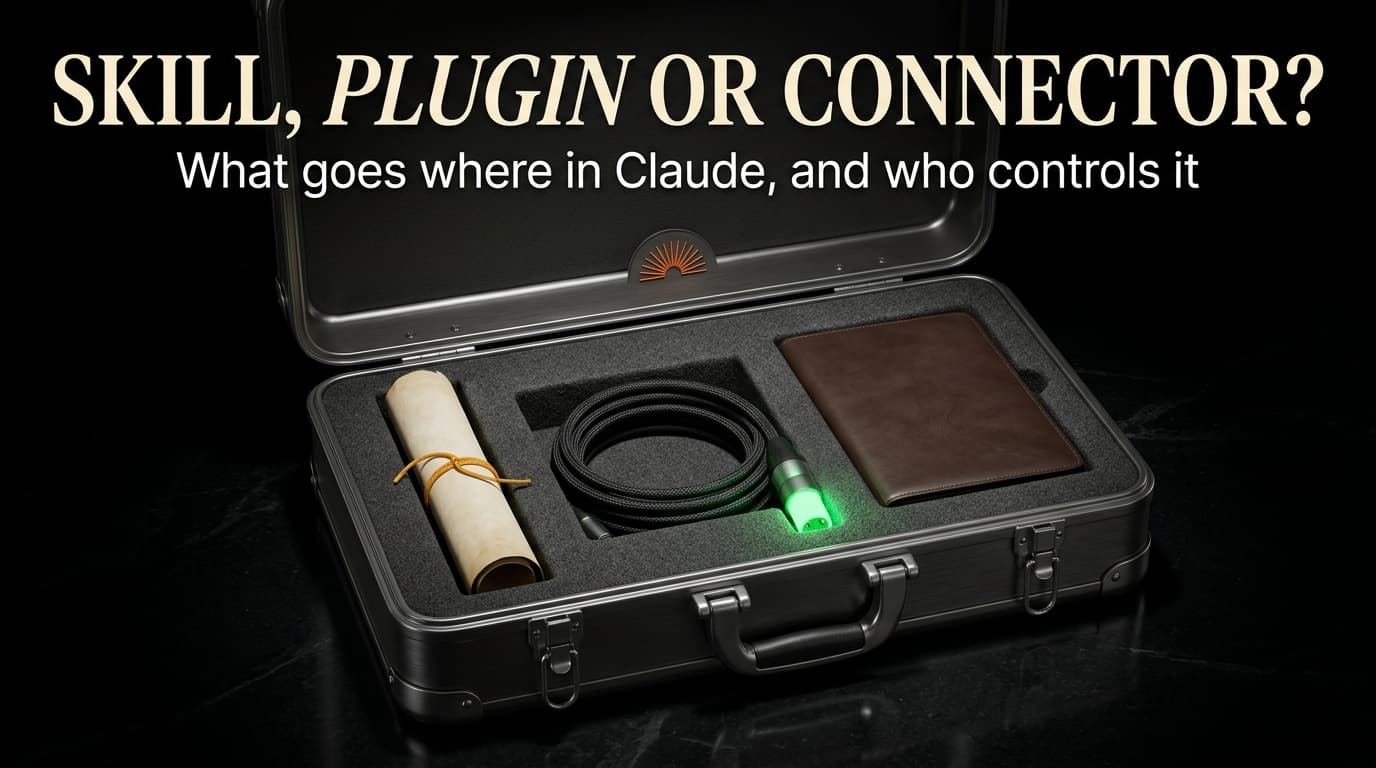
Claude plugins vs skills vs connectors vs Projects: which to use (2026)
Skills, plugins, connectors and Projects compared in one table: what each is, what it contains, where it runs in chat, Cowork and Claude Code, when to use which, and how a Claude Team owner provisions each one org-wide.

Claude SSO and admin settings: how to set up a Claude Team org (2026)
How to set up Claude SSO on a Team plan: domain verification, Require SSO and the lockout traps, roles and JIT provisioning, every organization settings page and its Team default, and what needs Enterprise (SCIM, audit logs).